
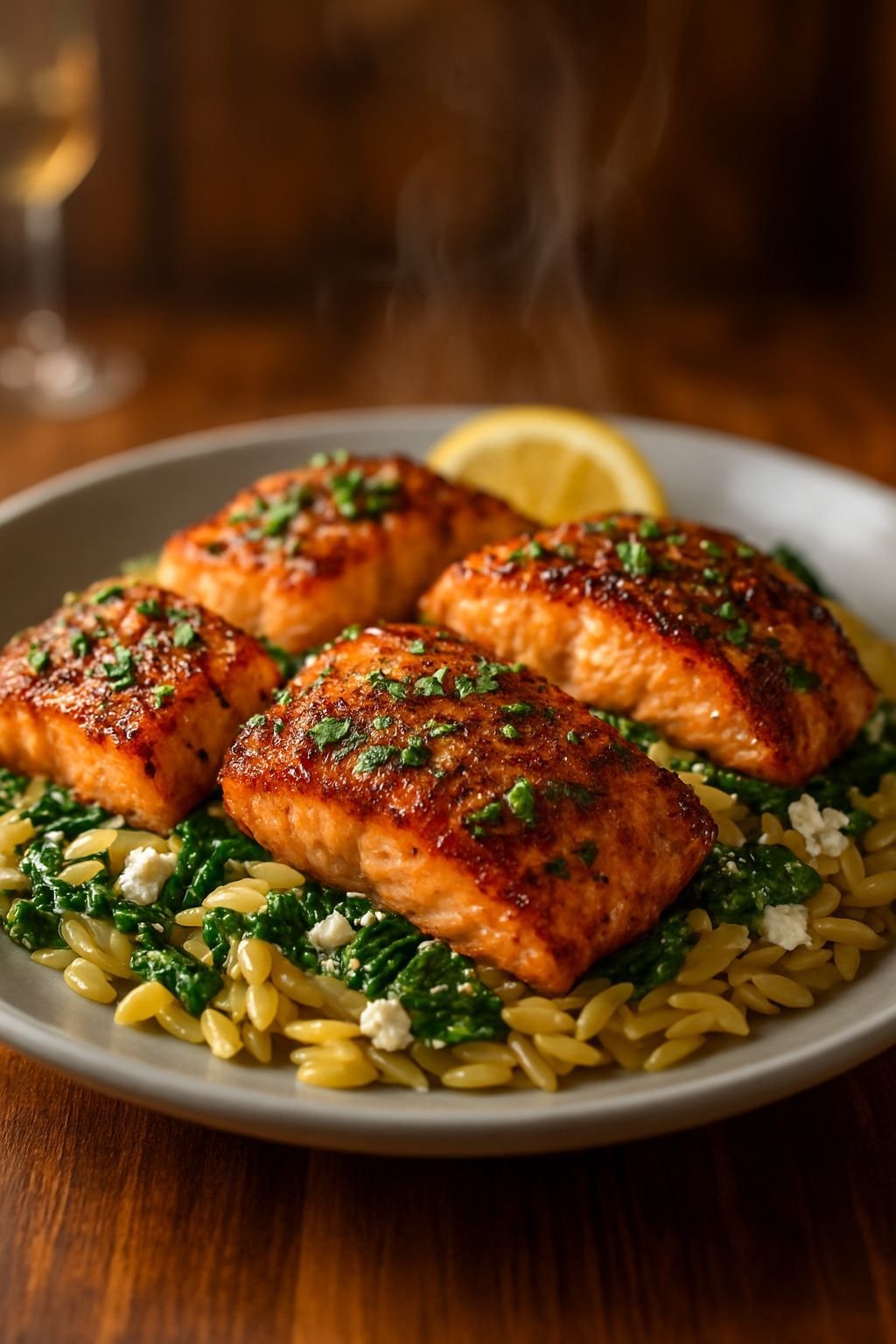
Want the cozy satisfaction of a creamy, cheesy pasta bowl elevated with elegant, omega-rich lemon salmon on top? It’s your new favorite balanced indulgence. This recipe gives you complete control over freshness, seasoning and portions — a flavorful, healthy weeknight dinner you can confidently plate for family or guests.
This post walks you through every detail — exact ingredients, useful substitutions, time estimates, step-by-step cooking instructions with practical chef tips, nutrition highlights, variations for special diets and equipment, common mistakes and how to avoid them, plus storage and reheating advice. Follow along and you’ll have a dependable system to make Lemon Butter Salmon with Orzo, Spinach & Feta perfectly every time.
Essential Ingredients
Below are the ingredient amounts for 4 servings. Adjust proportionally for 2 or 6 servings.
For the Salmon
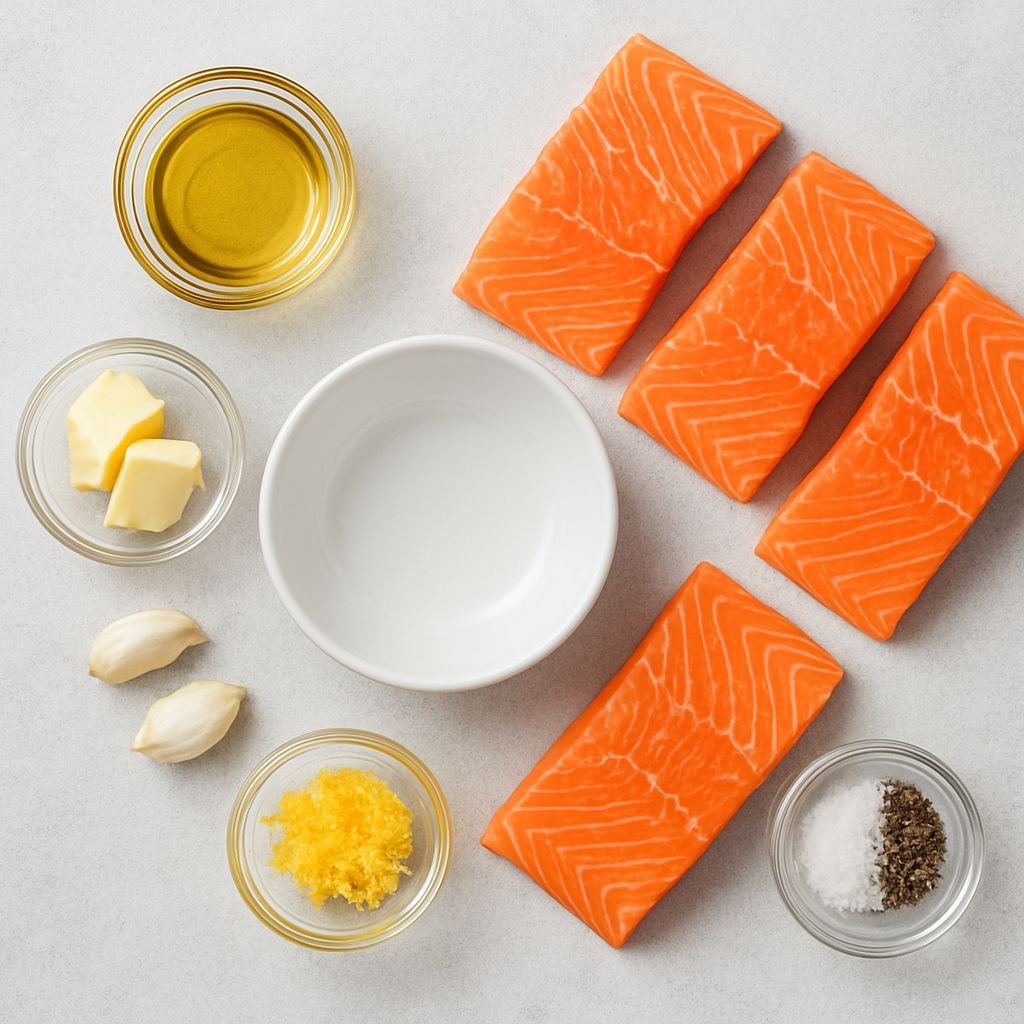
- 4 salmon fillets (4–6 oz / 115–170 g each), skin-on or skinless as preferred
- 1 tablespoon olive oil (15 ml)
- 2 tablespoons butter (28 g)
- 2 cloves garlic, minced
- 1 teaspoon lemon zest (about 2 g)
- Salt and freshly ground black pepper, to taste
- Juice of 1 lemon (about 30 ml)
For the Orzo, Spinach & Feta
- 1 cup dry orzo (about 170–200 g)
- 1 3/4 cups low-sodium chicken or vegetable broth (420 ml) — use water plus bouillon if needed
- 1 tablespoon olive oil or 1 tablespoon butter (optional, for toasting orzo)
- 1 small onion or 2 shallots, finely chopped
- 2 cloves garlic, minced (additional for the orzo)
- 5–6 cups fresh baby spinach (150–180 g), stems removed
- 3–4 oz feta cheese, crumbled (85–115 g)
- Salt and pepper to taste
- Optional: 1/4 teaspoon crushed red pepper flakes, 1 tablespoon chopped fresh parsley or dill
Optional Garnishes
- Extra lemon wedges
- Chopped fresh dill or parsley
- More crumbled feta or a drizzle of extra virgin olive oil
Substitutions
- Salmon: trout or steelhead make good substitutes.
- Orzo: substitute forzo with orzo-shaped gluten-free pasta, quinoa, rice, or cauliflower rice (see variations).
- Feta: goat cheese or ricotta salata work; omit for dairy-free.
- Butter: use ghee or extra olive oil for dairy-free.
Necessary Kitchen Tools
- Large nonstick or stainless steel skillet (10–12 inches) or cast iron skillet for the salmon
- Medium saucepan with lid for the orzo
- Spatula or fish spatula
- Chef’s knife and cutting board
- Citrus zester and juicer (optional but handy)
- Measuring cups and spoons
- Tongs
- Colander or fine-mesh strainer
- Instant-read thermometer (recommended for perfect salmon)
Prep and Cooking Time — Plan Your Evening
Accurate timing helps coordinate the orzo and salmon so both components are served hot.
- Active prep time: 15–20 minutes (chopping, zesting, measuring)
- Orzo cooking time: 12–15 minutes (start first so it’s resting when salmon finishes)
- Salmon cooking time (stovetop sear + butter-baste): 6–10 minutes depending on thickness and whether you finish in the oven
- Total time: 30–40 minutes from start to finish for a typical 1-inch thick fillet and standard orzo method
Planning tip: Start the orzo first. While it simmers, prepare the salmon — this sequencing means both components finish at roughly the same time and you can plate immediately.
Step-by-Step Instructions
Follow these steps for dependable results. Timing notes and chef tips are included throughout.
- Season the salmon and prep aromatics (5 minutes). Pat salmon fillets dry with paper towels — this helps achieve a good sear. Season both sides generously with salt and pepper. Zest one lemon and squeeze the juice into a small bowl. Mince the garlic for the butter sauce and for the orzo.
Chef tip: Dry fish sears much better. If the fillets are cold from the fridge, let them sit 10 minutes while you start the orzo so the center isn’t too chilled. - Toast and start the orzo (5 minutes active, 12–15 minutes simmer). In a medium saucepan, heat 1 tablespoon olive oil or butter over medium heat. Add chopped onion and sauté 2–3 minutes until soft and translucent. Add 1 clove minced garlic and the orzo; toast for 1–2 minutes, stirring, until orzo turns lightly golden — this adds nutty flavor and prevents clumping. Pour in the broth, bring to a boil, then reduce to a simmer and cover. Simmer for about 8–10 minutes, stirring once or twice, until orzo is al dente. If the orzo looks dry before it’s done, add 1–4 tablespoons of hot water or broth. When cooked, remove from heat; immediately stir in spinach so it wilts in the residual heat, then fold in crumbled feta, a squeeze of lemon juice, salt and pepper. Chef tip: Toasting the orzo gives depth and prevents mush. Don’t overcook — orzo will continue to absorb liquid while resting.
- Heat the skillet and sear the salmon (2 minutes prep + 3–4 minutes cook per side). While the orzo simmers, preheat a large skillet over medium-high heat. Add 1 tablespoon olive oil and heat until shimmering but not smoking. Place salmon fillets in the pan, presentation-side down (skin-side down if skin-on). Cook undisturbed 3–4 minutes until the bottom is golden and a crisp edge forms.
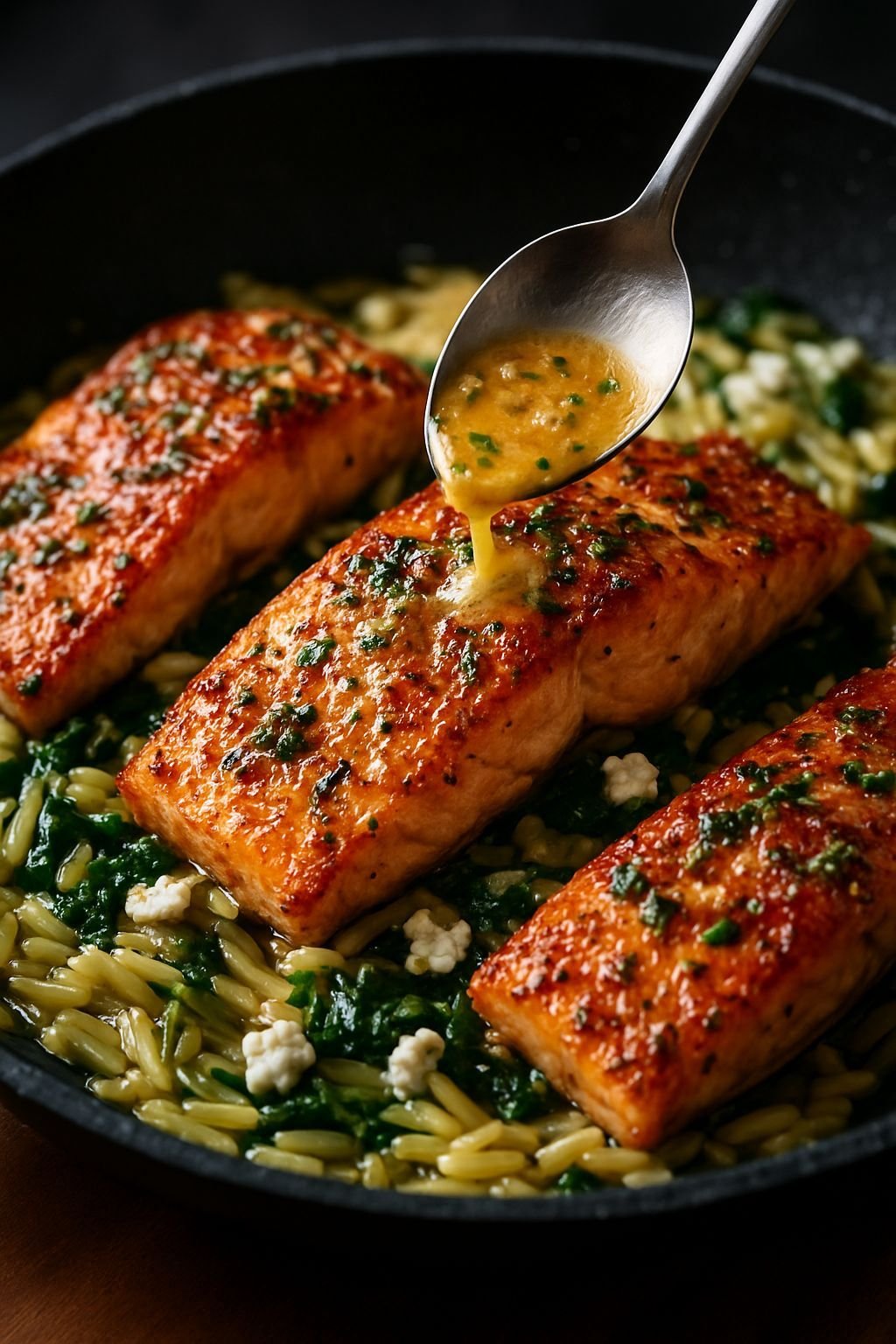
Chef tip: Resist moving the fillets during the first sear — this helps the crust form. If the fillet resists when you try to flip, it likely isn’t ready yet. - Butter-baste with garlic and lemon (2–3 minutes). Flip fillets gently with a spatula. Add 2 tablespoons butter to the pan and reduce heat to medium. When butter melts, add the minced garlic and lemon zest. Tilt the pan slightly and spoon the melted butter over the top of the salmon repeatedly (baste) for 1–2 minutes to infuse the fish with flavor. Finish with a squeeze of fresh lemon juice and remove from heat when salmon reaches an internal temp of 120–125°F (49–52°C) for medium-rare to medium — it will rise a few degrees while resting.
Chef tip: Use an instant-read thermometer for precise doneness. For fully opaque, flaky salmon, cook to 130–135°F (54–57°C). Overcooking dries salmon quickly. - Rest briefly and adjust the orzo consistency (1–2 minutes). Transfer salmon to a plate and tent loosely with foil for 3 minutes. Taste and adjust orzo seasoning — add a splash of broth or a drizzle of olive oil if it feels tight. Fold in herbs if using. Chef tip: Resting lets the juices redistribute and keeps the fish moist. The orzo should be creamy but not soupy.
- Plate and garnish (2 minutes). Spoon orzo onto plates, place a salmon fillet on top, spoon a little of the lemon-butter pan sauce over the fillet, and finish with extra crumbled feta, chopped parsley or dill, and a lemon wedge. Serve immediately. A simple green salad or steamed green beans make excellent sides.
Practical Chef Tips for a Stellar Result
- Pat salmon dry and season generously — salt enhances the fish’s natural flavor.
- Use room-temperature salmon if possible (about 10 minutes out of the fridge) to ensure even cooking.
- Don’t overcrowd the pan; give each fillet space to sear. If your pan is small, cook in two batches.
- Toast orzo before adding liquid — it adds a nutty flavor and improves texture.
- Baste salmon with butter during the final minute for glossy, flavorful skin and top.
- Keep a small bowl of hot water when cooking orzo to loosen it without cooling the pot.
Nutritional Benefits & Health Advantages
Making this Lemon Butter Salmon with Orzo, Spinach & Feta at home is not only delicious — it’s also nutritionally strong and economical compared to dining out.
Why this meal is healthy
- Salmon is rich in omega-3 fatty acids (EPA and DHA), which support heart health, brain function and anti-inflammatory processes.
- High-quality protein in salmon supports muscle repair and satiety; a typical fillet offers 22–30 g protein depending on size.
- Spinach supplies vitamins A, C and K, plus iron, folate and fiber.
- Using olive oil and modest butter keeps saturated fat moderate while providing monounsaturated fats.
- Feta adds flavor and calcium; using a small amount goes a long way toward taste while keeping calories reasonable.
Approximate nutrition per serving (4 servings total)
These are estimates and will vary with exact ingredients and portion sizes. Use a nutrition calculator for precise numbers if needed.
- Calories: ~600–700 kcal per serving
- Protein: ~35–40 g
- Fat: ~28–36 g (mostly from salmon oil, olive oil, and butter; adjust by reducing butter)
- Carbohydrates: ~40–50 g (mostly from orzo)
- Fiber: ~3–5 g
Note: Swap orzo for quinoa or cauliflower rice to reduce carbs and calories for a lower-carb or keto-friendly meal (see variations below).
Cost savings compared to eating out
Making this recipe at home saves money in several ways:
- Raw salmon fillets at most markets cost considerably less per portion than a restaurant salmon entrée. Buying family packs or frozen vacuum-sealed fillets can reduce cost further.
- Orzo, spinach and feta are inexpensive pantry/produce items that stretch across multiple meals.
- Leftovers can be repurposed (see storage section), increasing value per dollar spent.
Estimate: A comparable restaurant plate often costs 2–4× the grocery cost — depending on region and establishment.
Variations & Alternative Cooking Methods
Adapt this recipe easily for different diets, equipment, or preferences.
Gluten-free
- Swap orzo for a gluten-free orzo-shaped pasta, quinoa or rice (use same liquid ratios and adjust cooking times).
- Or use brown rice for more fiber; cook according to package and fold in spinach and feta.
Keto / Low-carb
- Skip the orzo. Make a bed of sautéed spinach, zucchini noodles or cauliflower rice. Top with the butter-basted salmon and feta.
Dairy-free
- Replace butter with extra virgin olive oil or avocado oil in both orzo and salmon sauce. Omit feta or use a dairy-free crumbly cheese alternative.
Sheet-pan method (easy cleanup)
- Use small orzo cooked separately, or roast vegetables on a sheet pan and bake salmon on the same sheet. Bake salmon at 400°F (200°C) for 10–14 minutes depending on thickness; baste with lemon-butter (or oil) mid-bake.
Grill (summer option)
- Grill salmon skin-side down over medium-high heat 4–5 minutes per side, finish with lemon butter brushed on after removing from grill to prevent flare-ups. Serve on cold orzo salad (orzo cooled and tossed with greens and feta).
Air fryer
- Preheat air fryer to 400°F (200°C). Lightly oil salmon and cook 7–10 minutes depending on thickness. Baste with butter after cooking to avoid burning butter in the fryer.
Make it a one-pan dinner
- Use an oven-safe skillet: sauté onions, add orzo and broth, cover and bake 15–18 minutes while salmon sears in a separate pan or finishes in the oven on top of the orzo if space allows. Add spinach near the end so it wilts.
Common Mistakes & How to Avoid Them
- Overcooking the salmon. Fix: Use an instant-read thermometer and remove salmon at 120–125°F (49–52°C) for slightly rare/medium-rare or 130–135°F (54–57°C) for fully opaque, flaky. Remember carryover cooking while resting.
- Undersalted orzo. Fix: Season the cooking liquid or the finished orzo — taste and adjust. Low-sodium broth is fine, but add salt as needed.
- Soggy or clumpy orzo. Fix: Toast orzo first, use the right liquid ratio, and drain any excess liquid if overcooked. Add a little oil and fluff with a fork.
- Burning garlic when basting. Fix: Add garlic to butter toward the end and keep heat at medium; garlic burns quickly and becomes bitter.
- Flaked salmon falls apart when flipping. Fix: Use a fish spatula, flip gently, and only flip once. Let the seared side form a crust before turning.
Storage, Reheating & Make-Ahead Tips
Make this dish ahead or store leftovers the right way to maintain texture and flavor.
Short-term storage (refrigerator)
- Cool components to room temperature (no more than 2 hours after cooking). Transfer to airtight containers.
- Store salmon and orzo separately if possible — this preserves texture better. Refrigerate up to 3 days.
- Label containers with date to keep track.
Freezing
- Salmon freezes well if vacuum sealed or tightly wrapped. Freeze cooked salmon for up to 2 months. Texture changes slightly after freezing, so use frozen portions in salads, bowls or pasta dishes.
- Orzo with spinach and feta is best refrigerated rather than frozen — spinach can become mushy after thawing.
Reheating
- Reheat salmon gently to avoid drying. Best method: preheat oven to 275°F (135°C), place salmon on a baking sheet, cover loosely with foil, and warm 10–15 minutes until 110–125°F (43–52°C) depending on desired doneness.
- Stovetop warming: heat a skillet over low heat with a splash of broth or olive oil and cover briefly to steam through.
- Microwave: use low power (50%) and short bursts (20–30 seconds) to prevent rubbery texture. Add a teaspoon of water or broth to keep moist.
- Orzo: reheat in a skillet with a splash of broth and stir until warmed. Add extra feta or a squeeze of lemon to refresh flavors.
Make-ahead tips
- Cook orzo and chill it — when ready to serve, quickly reheat on stove, fold in fresh spinach and feta, and make salmon just before serving to keep it fresh and tender.
- Prep garlic, zest and lemon juice ahead of time and store in airtight containers in the fridge for 1–2 days.
Conclusion — Key Takeaways
Lemon Butter Salmon with Orzo, Spinach & Feta is a bright, satisfying dish that balances rich, buttery salmon with tangy lemon and salty feta over a creamy bed of orzo and wilted spinach. It’s versatile, quick (about 30–40 minutes), and easily adapted to gluten-free, keto or dairy-free diets. The keys to success are: pat salmon dry, toast the orzo, don’t overcook the fish, and finish with fresh lemon and herbs.
Try this method once and you’ll have a reliable framework to tweak flavors (add capers, olives, sun-dried tomatoes or herbs) or change sides. If you make this recipe, I’d love to hear how it turned out — share a photo and any tweaks you tried in the comments or on social media.
FAQs
- Can I use frozen salmon? Yes. Thaw in the refrigerator overnight, pat dry thoroughly, then proceed with the recipe. For a faster option, rinse under cold water then pat dry if partially thawed, but fully thawing gives best texture.
- My orzo is gummy — what happened? Likely overcooked or too much liquid was used. Toast the orzo next time, use correct liquid ratio, and keep an eye on cooking time. Rinse cooked orzo briefly under hot water and toss with a little olive oil to rescue texture if needed.
- How do I prevent the salmon from sticking? Ensure the pan is hot before adding oil, pat the salmon dry, and don’t try to flip until a crust has formed. Use a good nonstick or well-seasoned cast iron skillet.
- Can I bake the salmon instead of searing? Yes. Bake at 400°F (200°C) for ~10–14 minutes depending on thickness. Finish with the lemon-butter sauce spooned over after baking to avoid burning the butter.
- What should I serve with this dish? Simple sides like a crisp green salad, roasted asparagus, steamed green beans, or lemon-garlic broccolini pair well and keep the meal balanced.