
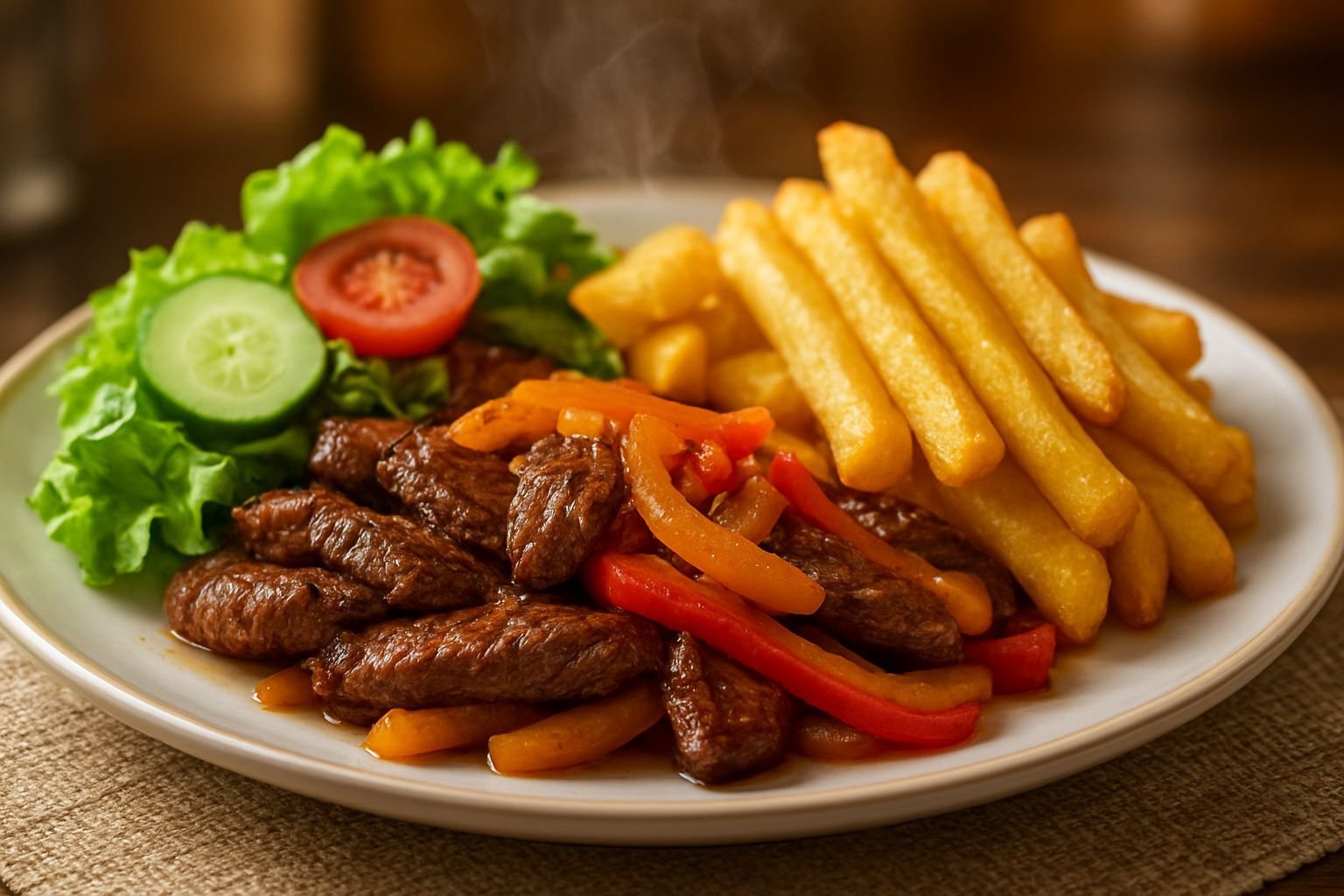
Tired of bland, repetitive meal-prep chicken? Transform an affordable cut of beef into a week’s worth of vibrant, restaurant-style fajita bowls. Cooking this dish yourself delivers bolder flavors, fresher produce, and complete control over seasoning, portion size, and cooking method. It’s a perfect combination of juicy, seared steak, crisp golden fries, and a bright, refreshing salad that balances indulgence with freshness — all on your schedule.
Why Make Steak Fajitas with Fries & Fresh Garden Salad at Home?
Making this trio at home gives you three big advantages: flavor control, ingredient transparency, and cost savings. You can dial the seasoning to your taste (more smoke, less salt, or a citrus punch), choose high-quality proteins and produce, and avoid hidden additives or excess oil. Plus, with a few simple techniques — quick marination, high-heat searing, and oven-baked fries — you’ll achieve the contrast of textures and aromas that make this meal feel like a special dinner, not just another weeknight plate.
Essential Ingredients, Substitutions, and Kitchen Tools
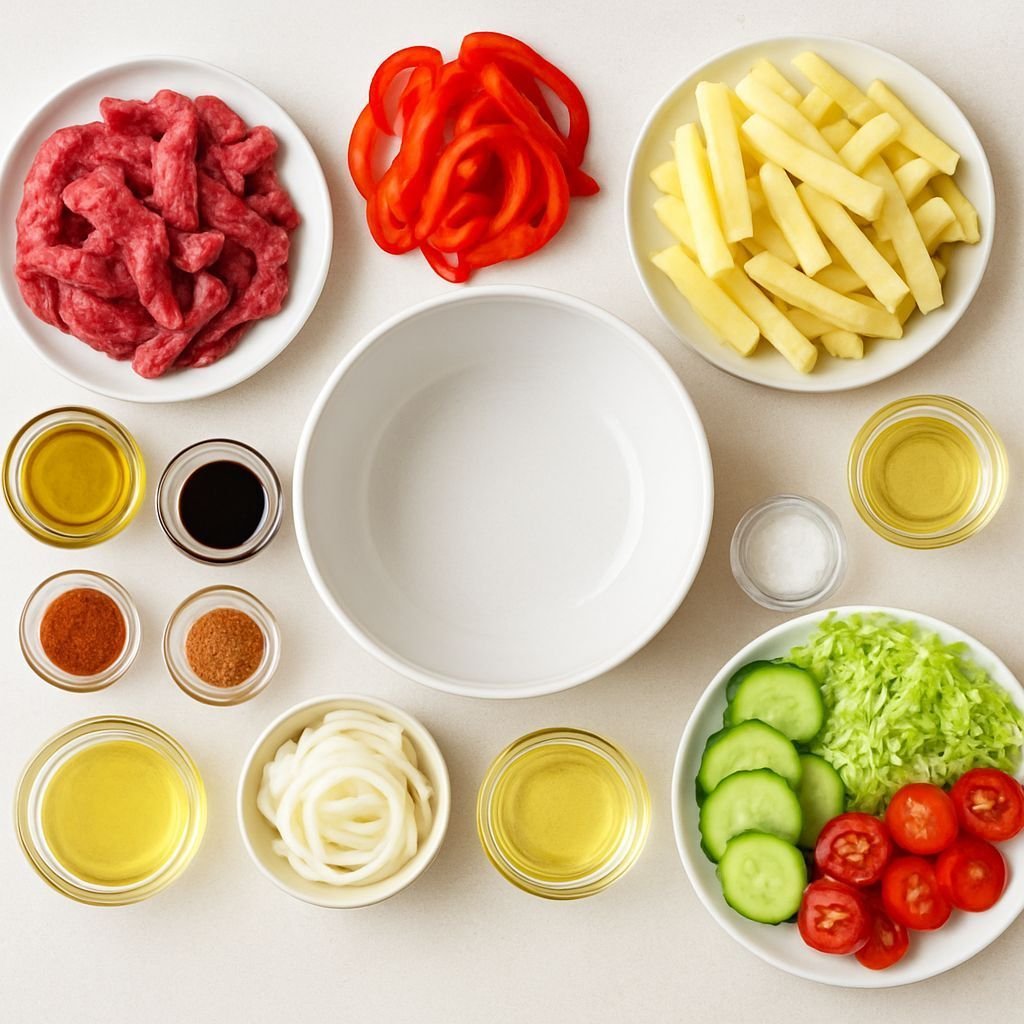
Ingredients (Serves 2)
- For the Steak Fajitas
- 1 lb (450 g) flank or sirloin steak, trimmed and cut into strips
- 1/2 red bell pepper, sliced into 1/4-inch strips
- 1/2 yellow bell pepper, sliced into 1/4-inch strips
- 1 small onion, thinly sliced
- 2 tbsp olive oil (divided — 1 tbsp for steak, 1 tbsp for veggies)
- 1 tbsp soy sauce (or tamari for gluten-free)
- 1 tsp smoked paprika
- 1/2 tsp ground cumin
- Salt and black pepper to taste
- For the Fries
- 2 large potatoes, cut into thick fries (or use russet for best crisping)
- 1 tbsp vegetable oil (or avocado oil)
- Salt to taste
- For the Fresh Garden Salad
- 1/2 cucumber, sliced
- 1 cup lettuce, shredded (romaine, butter, or mixed greens)
- 5–6 cherry tomatoes, halved
- 1 tbsp olive oil
- 1 tsp lemon juice
- Salt and black pepper to taste
Optional Substitutions
- Protein: Use skirt steak, ribeye, or flank. For a budget or lean option, choose top sirloin or a 70/30 ground beef for a different texture.
- Gluten-free: Replace soy sauce with tamari or coconut aminos.
- Low-carb: Swap fries for roasted cauliflower florets or turnip fries.
- Vegetarian: Replace steak with sliced portobello mushrooms or seasoned tofu (extra-firm, pressed and pan-seared).
- Fries alternatives: Sweet potatoes (season lightly), frozen oven fries, or air-fryer wedges.
Necessary Kitchen Tools
- Sharp chef’s knife and cutting board
- Mixing bowls for marinade and salad
- Large skillet or cast-iron pan (12-inch recommended) for searing steak and sautéing veggies
- Baking sheet (rimmed) for oven fries; a wire rack optional but recommended
- Tongs or a spatula for turning
- Oven preheated to 425°F (220°C) for the fries (or an air fryer)
- Instant-read thermometer (recommended) for precise steak doneness
Timing: Prep, Cook, and Total Time
Planning is half the battle when you’re making a three-component meal. Here’s a realistic breakdown so you can coordinate the fries, steak, and salad so everything finishes hot and fresh.
- Prep time: 15 minutes (slice steak, cut potatoes, prep veggies, mix marinade)
- Cook time: 25 minutes (fries in oven 25–30 minutes; steak and veggies 8–12 minutes active cooking)
- Total time: 40 minutes (allow overlapping cooking — start fries first, then do steak and salad)
Tip: Start the fries first because they take the longest, and while the fries roast you’ll marinate the steak, sear the meat, and toss the salad. Follow the detailed step-by-step below to keep timing smooth.
Step-by-Step Cooking Instructions (With Practical Chef Tips)
These instructions are ordered to help you orchestrate multiple elements with minimal downtime. Read through once before starting, lay out your mise en place, then follow the sequence.
- Prepare the Potatoes for Fries Preheat your oven to 425°F (220°C). Wash and peel the potatoes if you prefer (leave the skin on for extra texture). Cut into even thick fries — roughly 1/2–3/4 inch wide — for consistent cooking.
Chef tip: For crispier fries, soak cut potatoes in cold water for 10–20 minutes to remove excess surface starch. Pat completely dry on kitchen towels before oiling and seasoning. If short on time, at least blot well — moisture is the enemy of crispiness. On a rimmed baking sheet, toss the dried potato wedges with 1 tbsp vegetable oil and a pinch of salt. Spread them in a single layer with space between pieces. For maximum crisping, use a lightly oiled wire rack set on the sheet so hot air circulates around the fries. Bake for 25–30 minutes, flipping halfway through. If you like a deeper golden crust, finish with a 2–3 minute broil, watching closely to avoid burning. - Marinate the Steak In a bowl, combine 1 tbsp olive oil, 1 tbsp soy sauce, 1 tsp smoked paprika, 1/2 tsp ground cumin, salt, and pepper. Add the steak strips and toss to coat evenly. Marinate for at least 5–10 minutes while the oven comes to temperature and you prep the vegetables; for deeper flavor, marinate up to 2 hours in the fridge.
Chef tip: Use a shallow dish or resealable bag for even coating. Soy sauce adds umami and salt; reduce or omit if you prefer lower sodium and adjust later. - Start the Salad (Quick Toss) Combine the shredded lettuce, sliced cucumber, and halved cherry tomatoes in a bowl. Toss with 1 tbsp olive oil, 1 tsp lemon juice, salt, and pepper. Keep the salad chilled until plating so it stays crisp and bright. Chef tip: Dress the salad lightly right before serving. Over-dressing ahead of time wilts the greens and releases water.
- Heat the Pan and Sear the Steak Place a large skillet or cast-iron pan on high heat and let it get very hot for 2–3 minutes. Add 1 tbsp olive oil and swirl to coat. Shake off excess marinade from the steak strips and arrange them in a single layer without crowding. Sear for 1–2 minutes per side until a rich brown crust forms. Work in batches if necessary.
Chef tip: High heat creates the Maillard reaction — that desirable browning and flavor on meat. Don’t move the steak around too much while searing; let it develop the crust. Use tongs to flip. For thicker strips, cook 2–3 minutes per side and use an instant-read thermometer: medium-rare 130–135°F (54–57°C), medium 135–145°F (57–63°C). - Sauté the Veggies After removing the first batch of steak to a plate to rest, reduce the heat to medium-high and add the sliced onions and bell peppers to the same pan (add a splash more oil if the pan is dry). Sauté 4–6 minutes until softened and edges caramelize. If you have fond (browned bits) in the pan, deglaze with a tablespoon of water or a splash of soy sauce to lift flavor, scraping up browned bits with a spatula. Chef tip: Cook the veggies until they have color but retain a little crunch — that texture contrast makes fajitas more interesting. If you like your peppers very soft, cook an extra 2–3 minutes.
- Combine Steak and Veggies Return the seared steak strips to the pan, toss with the peppers and onion, and heat through for 1–2 minutes so flavors meld. Taste and adjust seasoning with a pinch of salt, pepper, or a squeeze of lemon or lime if you want brightness.
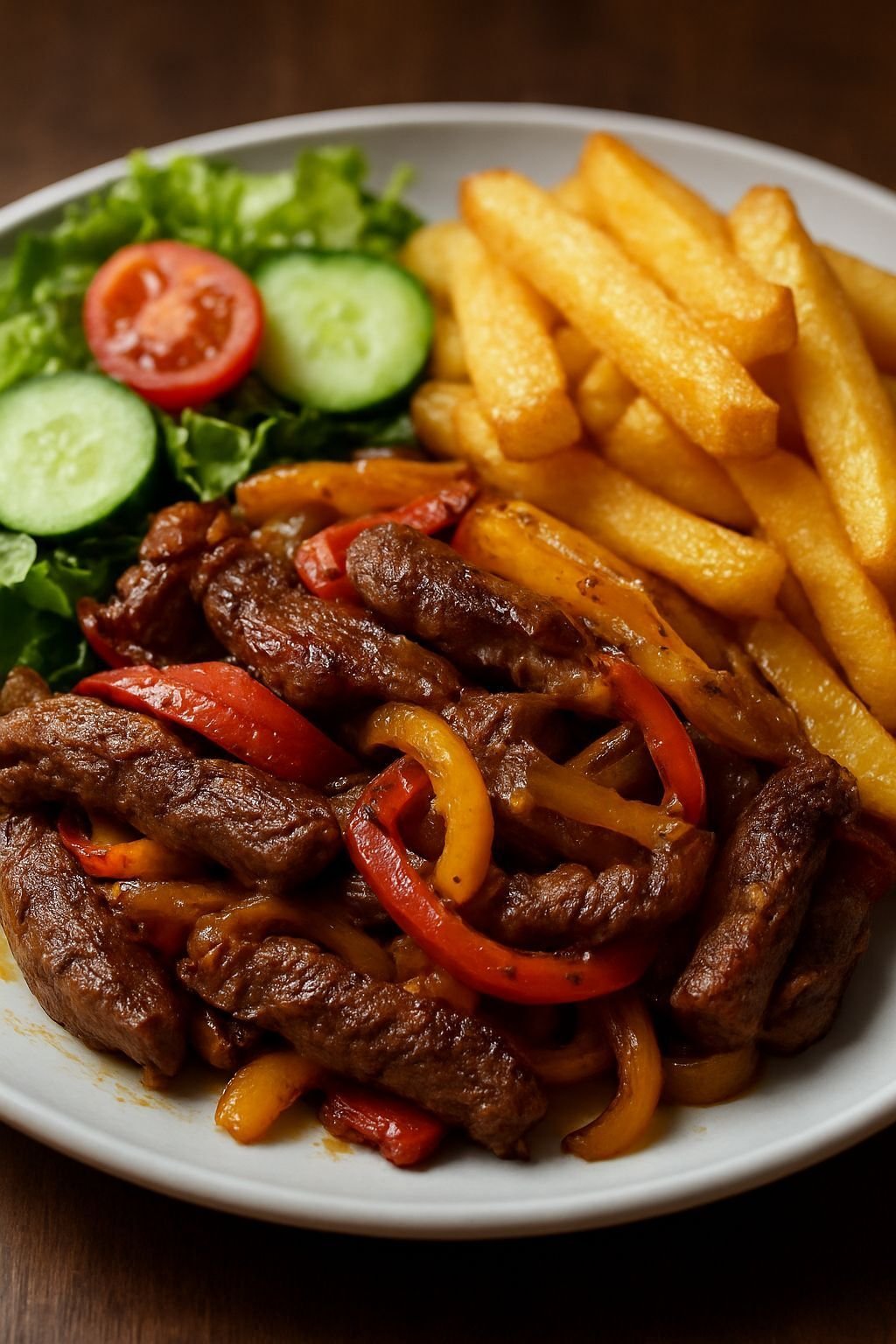
Chef tip: Resting meat briefly locks in juices. If the steak was very hot, combine and toss just until evenly reheated to avoid overcooking. - Plate and Serve Arrange steak fajitas on a plate alongside golden oven fries and the fresh garden salad. Garnish options include lime wedges, chopped cilantro, sliced avocado, or a dollop of Greek yogurt or sour cream. If you like, serve with warm tortillas for a fajita wrap; otherwise enjoy this as a plate meal.
Chef tip: Serve fries hot for best texture; if the fries finished before everything else, pop them back into a 350°F (175°C) oven for 5–7 minutes to refresh before plating.
Nutritional Benefits, Health Advantages, and Cost Savings
Nutritional Snapshot
The original recipe estimates roughly 790 calories per serving with around 50 g of protein. That aligns with a plate that contains a sizable portion of steak, oil used for frying and cooking, and fries. Here’s a clearer breakdown of the nutritional strengths you get from this plate:
- High protein: Steak delivers a concentrated dose of complete protein — about 45–55 g per serving depending on the cut and trimming. Protein supports muscle repair and satiety, helping you feel full longer.
- Micronutrients: Beef is an excellent source of iron (heme iron that’s bioavailable), zinc, vitamin B12, and niacin. The salad adds vitamin C, potassium, folate, and fiber from the greens and tomatoes.
- Healthy fats: Using olive oil for dressing and pan-searing contributes monounsaturated fats, which are heart-healthy in moderation. If you want to lower total fat, reduce the oil and increase lemon juice or use a non-stick pan.
- Fiber and antioxidants: The salad and peppers provide fiber and antioxidant compounds like lycopene from tomatoes and carotenoids from bell peppers, supporting overall health and digestion.
Health Advantages of Making This at Home
- Ingredient control: You decide how much oil and salt go into each component, enabling a lower-sodium or lower-fat version than many restaurant dishes.
- Freshness: Fresh vegetables retain more vitamins than prepackaged or fast-food options. Quick assembly preserves texture and nutrients.
- Portion sizing: Homemade portions can be adjusted to meet calorie goals. If you’re tracking macros, you can reduce the fries and increase salad to lower carbs while keeping protein high.
Cost Savings
Cooking steak fajitas at home can be significantly cheaper than dining out. Typical restaurant prices for a steak fajitas plate with sides range from $15–$30 per person depending on location and restaurant type; takeout and delivery can be similar or higher once fees are added. Here’s a simple cost comparison (approximate, variable by region and season):
- 1 lb flank/sirloin steak: $6–$12 (depending on sales and quality)
- 2 large potatoes: $1–$2
- Peppers, onion, salad ingredients, oil, seasonings: $3–$5 total
- Estimated total cost for 2 servings: $10–$20 → $5–$10 per person
Even with modest quality upgrades (grass-fed steak, organic produce), home cooking typically costs less than eating out and lets you invest in better ingredients for the same or lower price.
Useful Tips, Variations, and Alternative Cooking Methods
Flavor Boosters
- Add a squeeze of fresh lime or lemon at the end to brighten the dish and cut through richness.
- Stir in 1 tsp of honey or a pinch of brown sugar to the marinade for caramelization if you prefer a slightly sweet edge.
- For heat, add 1/4–1/2 tsp chili flakes, a minced jalapeño, or a dash of chipotle powder.
- Swap smoked paprika for ancho chili powder for a deeper, Southwestern flavor profile.
Alternative Cooking Methods
- Air fryer fries: Toss potatoes with a teaspoon of oil and air fry at 400°F (200°C) for 15–18 minutes, shaking halfway. Use high heat to encourage crisping.
- Grill: Cook the steak and peppers on a hot grill for a charred, smoky finish. Grill steak whole then slice against the grain for juicier results. Grill potatoes in foil packets or use a grill basket.
- Sous vide steak: For precise doneness, sous vide steak at 129°F (54°C) for medium-rare for 1–2 hours, then sear quickly in a hot pan for crust.
- Sheet-pan method: Toss steak strips, peppers, and onions together and roast on a high-heat sheet pan for an easy one-pan fajita dinner (watch closely so steak doesn’t overcook).
Diet-Specific Variations
- Low-carb / Keto: Skip the fries or replace them with roasted cauliflower florets tossed in oil and smoked paprika. Serve fajitas over lettuce wraps or in low-carb tortillas.
- Vegetarian: Replace steak with thickly sliced portobello mushrooms or extra-firm tofu. Marinate and sear the same way; mushrooms provide meaty texture and umami.
- Gluten-free: Use tamari or coconut aminos instead of soy sauce; ensure all seasonings are gluten-free.
- Paleo: Use grass-fed steak, olive or avocado oil, and swap fries for roasted sweet potato wedges or extra veggies.
Serving Ideas and Toppings
- Warm corn or flour tortillas for DIY fajitas
- Fresh cilantro, lime wedges, sliced avocado, or guacamole
- Pico de gallo or a simple salsa verde for brightness
- A dollop of Greek yogurt or sour cream to cool spicy bites
Common Mistakes and How to Avoid Them
- Overcrowding the pan: Crowding reduces heat and causes steaming instead of searing. Work in batches if needed.
- Not drying potatoes before baking: Wet potatoes won’t crisp. Pat dry thoroughly after any soaking or washing.
- Skipping the rest: Cutting into steak immediately causes juices to run out. Rest steaks for 5 minutes to redistribute juices.
- Underdressing or overdressing the salad: A little dressing goes a long way. Dress just before serving and keep it light to preserve crunch.
- Using low oven temperature for fries: Low heat yields limp fries. 425°F (220°C) is optimal for golden crust; higher oven temperatures may be needed for thicker cuts.
- Not tasting and adjusting: Season gradually and taste as you go. Acidity (lemon or lime) at the end lifts flavors dramatically.
Storage, Reheating, and Make-Ahead Tips
Short-Term Storage
- Steak and veggies: Store cooled steak and cooked peppers in an airtight container in the refrigerator for up to 3–4 days.
- Fries: Fries are best eaten the same day. If storing, keep them in an airtight container or paper-towel-lined container and re-crisp as below.
- Salad: Keep the salad undressed in the fridge in a sealed container for 1–2 days. Dress right before serving.
Reheating
- Fries: Reheat in a preheated oven at 400°F (200°C) or air fryer at 375°F (190°C) for 6–8 minutes to regain crunch. Avoid microwaving — it makes them soggy.
- Steak and veggies: Reheat gently in a skillet over medium heat with a splash of oil or low oven (300°F / 150°C) for 8–10 minutes until warmed through. Add a splash of broth or water to keep the steak moist if dry.
- Microwave quick warm: If timing is tight, microwave in short bursts at 50% power and finish in a hot skillet for texture. This preserves flavor better than microwaving alone.
Make-Ahead Strategies
- Marinate steak up to 2 hours ahead or freeze raw steak in marinade for meal prep.
- Par-cook fries: precut and parboil potatoes, then refrigerate. At serving time, pat dry and roast 15–20 minutes until crisp.
- Prep and chop salad items and keep them separate; assemble just before serving to maintain freshness.
Conclusion — Why This Recipe Works and a Final Nudge
This steak fajitas with fries and fresh garden salad recipe hits the trifecta: bold savory protein, crunchy comfort-side fries, and a bright, healthy salad to balance the plate. The techniques — quick marination, high-heat searing, and hot-oven baking — are straightforward but powerful, yielding restaurant-quality results at home. It’s flexible, affordable, and adaptable to many diets and equipment setups, making it a reliable weeknight winner or a weekend showstopper.
Try it tonight: start the fries first, sear the steak in a screaming hot pan, and keep the salad crisp and lightly dressed. Post your results, share any customizations you loved, and let others know how you tuned the seasonings. Happy cooking — and enjoy the sizzle!
Frequently Asked Questions (Concise Answers)
- Can I use a different cut of steak? Yes — skirt, flank, and sirloin all work well. Choose flank or skirt for classic fajita texture; if using ribeye, reduce cook time due to higher fat.
- How do I get extra-crispy oven fries? Soak cut potatoes 10–30 minutes, dry thoroughly, toss with a small amount of oil, spread in a single layer, and bake at 425°F (220°C) with a wire rack if possible. Flip halfway and broil briefly if needed.
- Can I make this gluten-free? Absolutely — swap soy sauce for tamari or coconut aminos and confirm all seasonings are gluten-free.
- What if my steak is overcooked? Slice thinly and serve with a sauce or pan jus to add moisture, or use for fajita-style wraps with creamy toppings to mask dryness.
- How far ahead can I marinate the steak? Marinate for at least 10 minutes and up to 2 hours in the fridge. For very acidic marinades, avoid more than a few hours to prevent textural mush; with this simple oil-soy-spice mix, 2 hours is fine.